Il Mastino Dei Baskerville Better Today
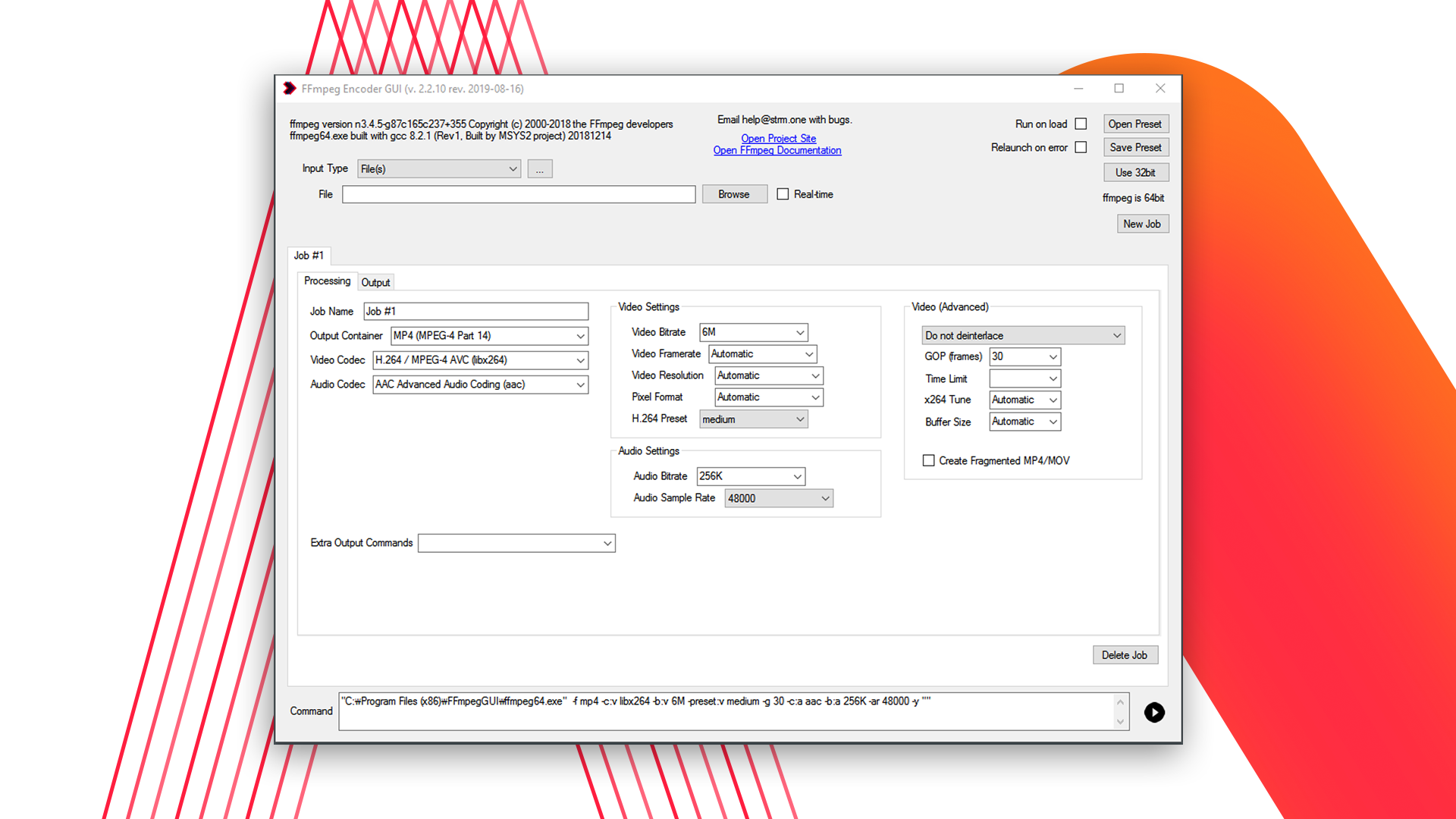
Version: 2.2.15 (2020-12-05)
Windows 32-bit or 64-bit supported
Version: 2.2.15 (2020-12-05)
Windows 32-bit or 64-bit supported
Added option to auto-relaunch if streaming/encoding pipeline stalls
Added real-time buffering checkbox to "URL" input options
Fragmented MP4 flag changed to "-movflags frag_keyframe+empty_moov" to conform to latest guidance
Added option to write FFmpeg output to weekly rotating logfile
Added menu option to save currently open preset without prompting for filename (i.e. File > Save)
Fixed minor cosmetic bug on main page
Fixed minor cosmetic bug on Encoding Status page
Fixed error with duplicate DirectShow devices
Fixed bug with non-ASCII DirectShow device names
Added textbox to provide custom input commands
Added input decoder read buffer option
Added NVENC presets list
Status display expanded with restart & kill commands
File output selection now includes filename prompt
Improved bitness checking allowing for smaller install footprint
Miscellaneous minor changes
Original release

FFmpegGUI currently supports File, DirectShow, Blackmagic Decklink, NewTek NDI or URL inputs.
Drag and drop your file(s) from your system to be processed quickly.
Prompting to rename any input file(s) with non-ASCII filenames to be compatible with command-line processor.
You can easily export your clip(s) to a file, NewTek NDI destination, RTMP server or any other custom output supported by FFmpeg.
The included FFmpeg is built with hardware encoding support for NVENC. GUI support is experimental at this time, feedback is welcome.
32-bit and 64-bit Windows binaries of FFmpeg included. Current binaries are based on version 3.4.5.
Save your encoding settings as file to be recalled later. Settings are formatted as an XML document.
GUI project is developed by ffmpeg fans and distributed for any usage. Non-free codecs in the included FFmpeg build may have further restrictions.
: The investigation shifts from London to the desolate, fog-shrouded Watson’s Solo Mission
Ora, la maledizione sembra essersi risvegliata: Sir Charles Baskerville, ultimo erede della tenuta, è stato trovato morto nei vialetti della sua magione con un’espressione di terrore sul volto. Accanto al corpo, le impronte giganti di un cane. L’erede designato è Sir Henry Baskerville, in arrivo dal Canada. Holmes, inizialmente riluttante, accetta il caso dopo aver notato che qualcuno sta già seguendo Sir Henry per le strade di Londra. Il Mastino Dei Baskerville
L’ispirazione per il romanzo arrivò durante una vacanza in Cornovaglia. Un amico, Fletcher Robinson, raccontò a Conan Doyle una leggenda locale del Devon: la storia di Sir Richard Cabell, un nobile del XVII secolo la cui anima maledetta, secondo la credenza popolare, usciva dalla tomba a cavallo di un gigantesco cane infernale. Conan Doyle rimase folgorato. Decise così di resuscitare Holmes in un contesto più teso e soprannaturale rispetto ai precedenti racconti. Il risultato fu un ibrido perfetto tra il romanzo poliziesco e il racconto dell’orrore. : The investigation shifts from London to the
La leggenda sembra fatta realtà quando Sir Charles Baskerville viene trovato morto nel parco della sua tenuta, con un'espressione di terrore sul volto e le impronte di un cane gigante nelle vicinanze. L'erede, Sir Henry Baskerville, arriva dal Canada per reclamare il titolo, ma il pericolo incombe. Holmes, pur sospettando che "il soprannaturale non esista", decide di indagare. Holmes, inizialmente riluttante, accetta il caso dopo aver
: Watson eventually discovers that Holmes has been hiding on the moor in secret to conduct his own investigation. The Resolution The Hound of the Baskervilles by Arthur Conan Doyle
Il Mastino dei Baskerville (original title: The Hound of the Baskervilles ) is the third novel featuring the iconic detective , written by Sir Arthur Conan Doyle . It is widely considered one of the greatest mystery novels of all time, famous for its eerie, gothic atmosphere and the legend of a diabolical, supernatural beast. Plot Summary